Your Essential Guide to Accident & Emergency Scenes
Planning an A&E scene for your TV or film production? You’re right to feel the pressure. A&E scenes are among the most difficult to get right! The fast pace, emotional intensity, and medical complexity, from ambulance arrivals to resuscitation procedures, leave little room for error.
Whether you’re filming a major trauma, stroke response, or life-saving emergency, authenticity makes all the difference between a scene that captivates and one that falls flat.
That’s where Medical Hire can help. This guide will help you understand what A&E medical props you need, where and when they appear, and how to build a realistic A&E set that stands up to scrutiny.
Understanding the Main A&E Areas
Before diving into specific props, it’s essential to understand the key zones within an A&E department. Depending on your script, you may need to recreate one or several of these areas:
Triage – The first assessment point where patients are prioritised based on clinical urgency
Minors / Minor Injuries – For less serious conditions such as cuts, sprains, and minor fractures
Major Trauma – For serious but non-life-threatening cases, including chest pain, severe infections, or fractures requiring intervention
Resuscitation (Resus) – A high-intensity area for critically ill or injured patients requiring immediate, life-saving treatment
Paediatric A&E – A dedicated area for children, often visually and practically different from adult A&E
Supporting Spaces
You may also need to consider:
- Reception and admissions
- Waiting areas
- X-ray or radiology (often adjacent to A&E)
- Plaster rooms for casts and splints
And remember, many emergency storylines begin before the hospital doors, during the crucial ambulance transfer.
The Emergency Journey: From Incident to A&E
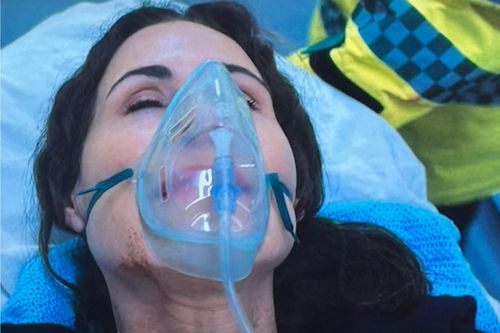
For this guide, we’re focusing on a critical injury or accident scenario where a patient is rushed into A&E. This could include major trauma, stroke, severe bleeding, burns, head injuries, or breathing difficulties.
Let’s follow that journey step by step, outlining the essential props you’ll need to create an authentic emergency scene.
Ambulance Scene Props
When your character is transported by ambulance, these props help create a realistic pre-hospital emergency environment that immediately signals urgency and professional care.
Patient Transport & Safety
- Ambulance stretcher or critical transport trolley – safely carries and supports patients during transport
- Ambulance transfer chair (stored inside the vehicle) – another way to move the patient
- Blankets or foil thermal blankets – maintains body temperature and prevents hypothermia
- Head blocks and neck collars – immobilises the head and neck to prevent further injury
- Spinal board (for suspected spinal injuries) – provides full spinal immobilisation during movement
Monitoring & Observations
- Monitor/defibrillator – monitors vital signs and delivers life-saving defibrillation
- Blood glucose monitor (also known as a BM kit) – measures blood sugar levels
- Digital thermometer – records body temperature
- Eye pen torch (for pupil response) – assesses pupil reaction and neurological status
- IV fluid warming kit – warms IV fluids to prevent hypothermia
Airway & Breathing
- Oxygen cylinder – supplies oxygen to support breathing
- Paramedic oxygen bag – stores and transports pain-relief gas equipment
- Portable ventilator for assisted breathing – assists or controls a patient’s breathing
- Oxygen delivery devices (e.g. CPR adult face mask) – delivers oxygen or ventilation
- Mouth-to-mouth resuscitation device – enables safer rescue breaths
Paramedic Accessories
- Large paramedic response bag – carries essential medical equipment
- Paramedic clipboard – holds patient records and documentation
- Paramedic torch – provides light for examinations and low-visibility scenes
- Paramedic helmet – worn during roadside or accident scenes to protect the head from hazards
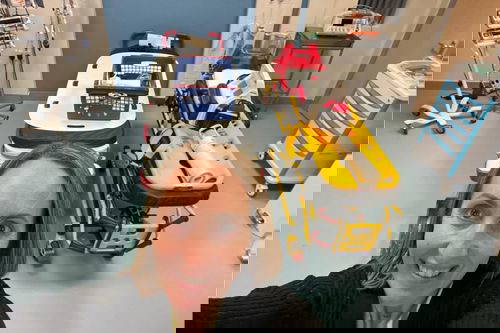
Note: While we don’t supply ambulances themselves, we stock all the medical equipment and props you’d expect to find inside one
Arrival at A&E: Major Trauma & Resuscitation
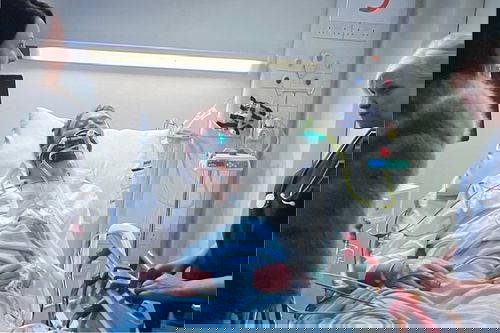
Once the patient arrives at the hospital, they’re typically transferred into a major trauma or resuscitation bay where specialist care begins immediately. This is where the intensity ramps up, and every piece of equipment needs to convey controlled urgency.
Circulation & Resuscitation Equipment
- Crash/resuscitation trolley – used to store and provide immediate access to life-saving equipment and drugs
- Airways Trolley – and accessories or devices to dress it, e.g defibrillator
- Defibrillator – delivers electrical shocks to restore normal heart rhythm
- Respiratory masks (e.g. CPAP) – supports breathing by delivering pressurised air or oxygen
- Ventilator – provides mechanical breathing support
- Patient monitoring system – continuously tracks vital signs
- Infusion pump (Infusomat drip) – delivers fluids or medication at a controlled rate
- Space station – secures and manages multiple infusion devices
- Giving sets and IV tubing – connects IV fluids or medication to the patient
- Bair Hugger and blanket to regulate body temperature
Patient-Specific Props
To dress the patient realistically, you may want to add these finer details:
- Multi-grip head immobiliser – stabilises the head during transport or treatment
- Hand cannula with dressing – provides venous access for fluids or medication
- Nasal cannula for oxygen delivery – delivers low-flow oxygen comfortably
- Drip stand with IV fluid bags – holds fluids for intravenous administration
- Blood transfusion bags – simulates or delivers blood products
- Personalised Hospital ID wristbands – identifies patients and key clinical details
- Disposable sick bowls – for safe management of nausea or vomiting
These small touches reflect real clinical practice and help set the scene.
Major Trauma Bay & Supporting Equipment
Beyond the immediate medical devices, the surrounding environment plays a crucial role in establishing authenticity. Audiences have become increasingly sophisticated about medical settings, so getting the background details right matters.
Essential A&E / Major Trauma Unit Set Dressing
- Adjustable trauma transfer trolley – used to transport patients through A&E
- Sink display unit with soap and paper towel dispensers – for hand hygiene and infection control
- Observation trolleys – used to hold and transport medical equipment
- Clinical waste bins – allows safe disposal of contaminated materials
- Sharps bins – securely disposes of needles and sharp instruments
- Surgical glove dispensers – provides quick access to sterile gloves for surgery or assessments
- Mobile screen panels with fabric curtains – creates temporary privacy for patients
- Wall-mounted Medirail panels – holds medical equipment and accessories at the bedside (vertical or horizontal)
- Wall lights – provides focused lighting for examinations and procedures.
- Wall racking bins – stores consumables and clinical supplies neatly
These elements create the organised, functional, and clinical atmosphere expected in a working A&E department. They’re the details that transform a set from fake to convincingly real.
How Medical Hire Can Support Your Production
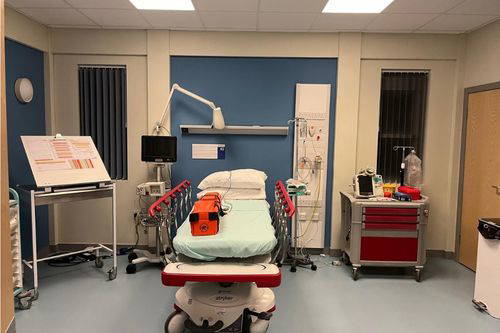
Every production is unique, and medical accuracy often hinges on how equipment is used, positioned, and interacted with on screen. A defibrillator in the wrong location or IV tubing attached incorrectly can break immersion for viewers with medical knowledge.
That’s why we don’t just supply props. Our highly experienced medical advisors are available to:
- Help select the right equipment for your specific storyline
- Set up the equipment correctly for filming
- Advise on realistic medical procedures
- Ensure continuity and accuracy across scenes
- Answer questions from cast and crew about medical protocols
Whether you’re filming a single emergency moment or building a complete A&E set, we’re here to support you from prep through to wrap.
Ready to Get Started on Your A&E Scene?
If you’d like help planning your A&E scenes or need advice on the right medical props for your production, get in touch with our Medical Hire team:
Phone: 0113 262 8000
Email: info@medicalhire.co.uk
Or browse our website to find your perfect props here